
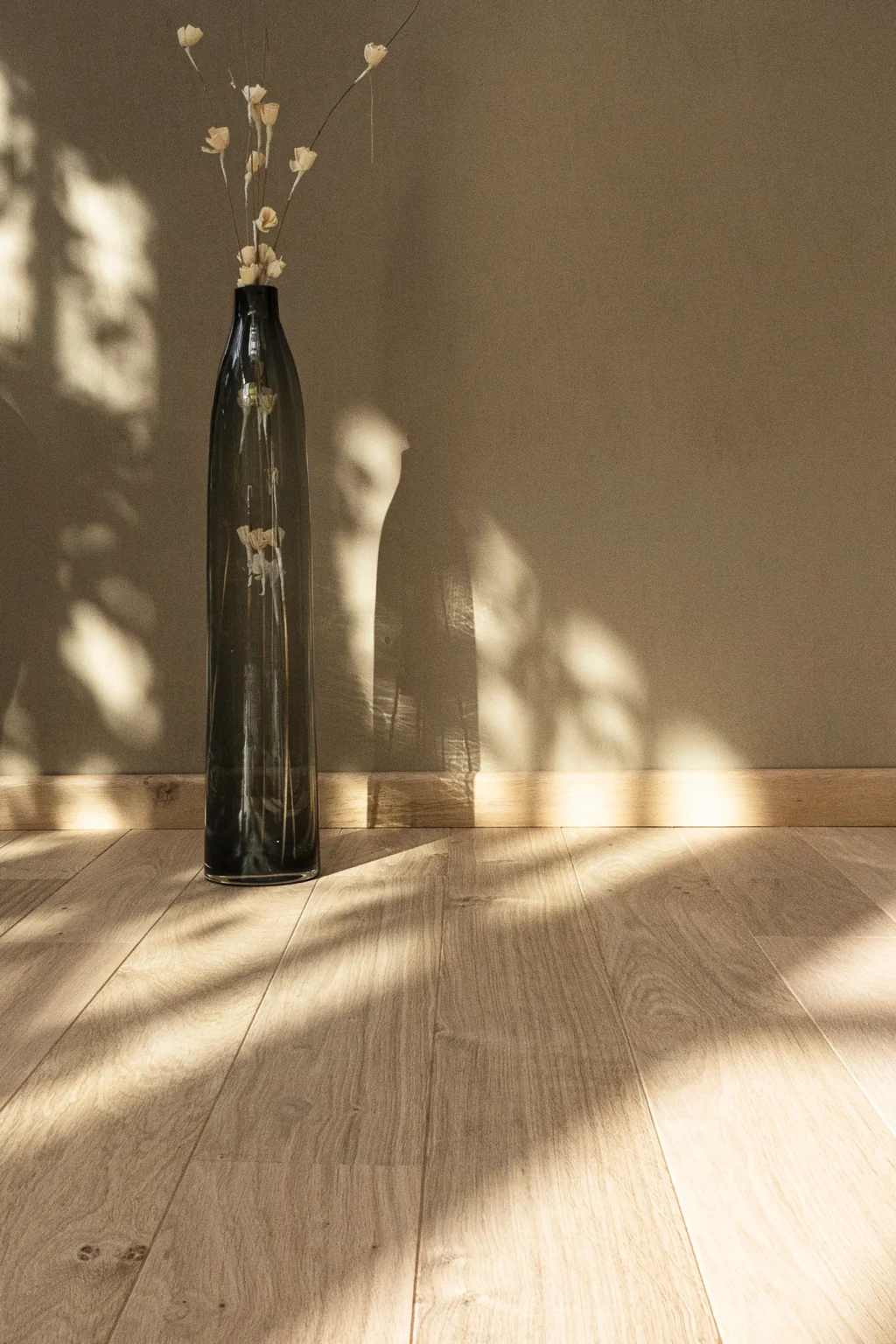
Choosing the finish is an important stage in any solid oak parquet project. It does not only determine the appearance of the wood: it also affects its protection, maintenance, resistance to use and how it develops over time. Between oiled parquet and varnished parquet, there is no single right answer. The right choice depends above all on the room’s intended use, the level of foot traffic and the occupants’ lifestyle.
What you need to know before choosing
An oiled finish penetrates into the wood. It maintains direct contact with the material and gives the parquet a natural presence, with a feel closer to solid oak. Oiled parquet changes over time: it develops a patina, gains subtle variations and follows the life of the space. It is a finish often chosen when a more direct, tactile relationship with the material is desired.
A varnished finish, by contrast, creates a protective layer on the surface. This film limits the penetration of stains and makes day-to-day maintenance easier. Varnished parquet is therefore often preferred in more heavily used areas, where regular protection and simplified cleaning are required.
Important point: varnished parquet is not necessarily glossy. Many people still associate varnishing with a shiny or polished appearance. Today, matt and ultra-matt varnishes make it possible to achieve a very understated, natural look, very close to an oiled finish. The choice should therefore not be based solely on visual appearance, but on the finish’s performance: resistance, maintenance, repairability and daily use.
When should you choose an oiled finish?
Oiled parquet is suitable for projects where priority is given to contact with the wood and the natural evolution of the material. It is particularly well suited to bedrooms, less exposed living rooms, or interiors where more regular maintenance is acceptable.
Its main advantage is the possibility of localised repairs. In the event of a scratch, mark or area of localised wear, it is often possible to treat a specific zone without refinishing the entire surface. In return, an oiled finish requires more care: cleaning with suitable products and re-oiling according to the intensity of use.
It is a relevant choice when the aim is to have a living parquet floor, maintained over time, with a more direct approach to the material.
When should you choose a varnished finish ?
Varnished parquet is recommended when the floor has to withstand more intensive use. It is very well suited to entrance halls, corridors, living areas, open-plan kitchens, offices, shops and public-facing spaces.
In a family home, or where there are pets, it may also be the more suitable option. Repeated foot traffic, paw marks, splashes, everyday minor accidents or frequent cleaning all call for a finish that is easier to live with. Varnishing then provides a more reassuring surface protection.
With a matt varnish, it is possible to retain a natural appearance without a glossy effect, while benefiting from easier maintenance. It should nevertheless be remembered that no finish makes a parquet floor indestructible: solid oak remains a natural, durable material, but one that is sensitive to how it is used.
How to make the right choice ?
To choose between oiled parquet and varnished parquet, it is important to start from the reality of the project. Is the room subject to heavy foot traffic ? Will the parquet be exposed to stains ? Does maintenance need to be simple ? Is the possibility of localised repairs important ? Are there children, pets or intensive uses to consider?
In summary, an oiled finish should be preferred when seeking a more direct contact with solid oak, a progressive patina and the possibility of localised interventions. A varnished finish is preferable when the objective is reinforced protection, simplified maintenance and better resistance to everyday wear.